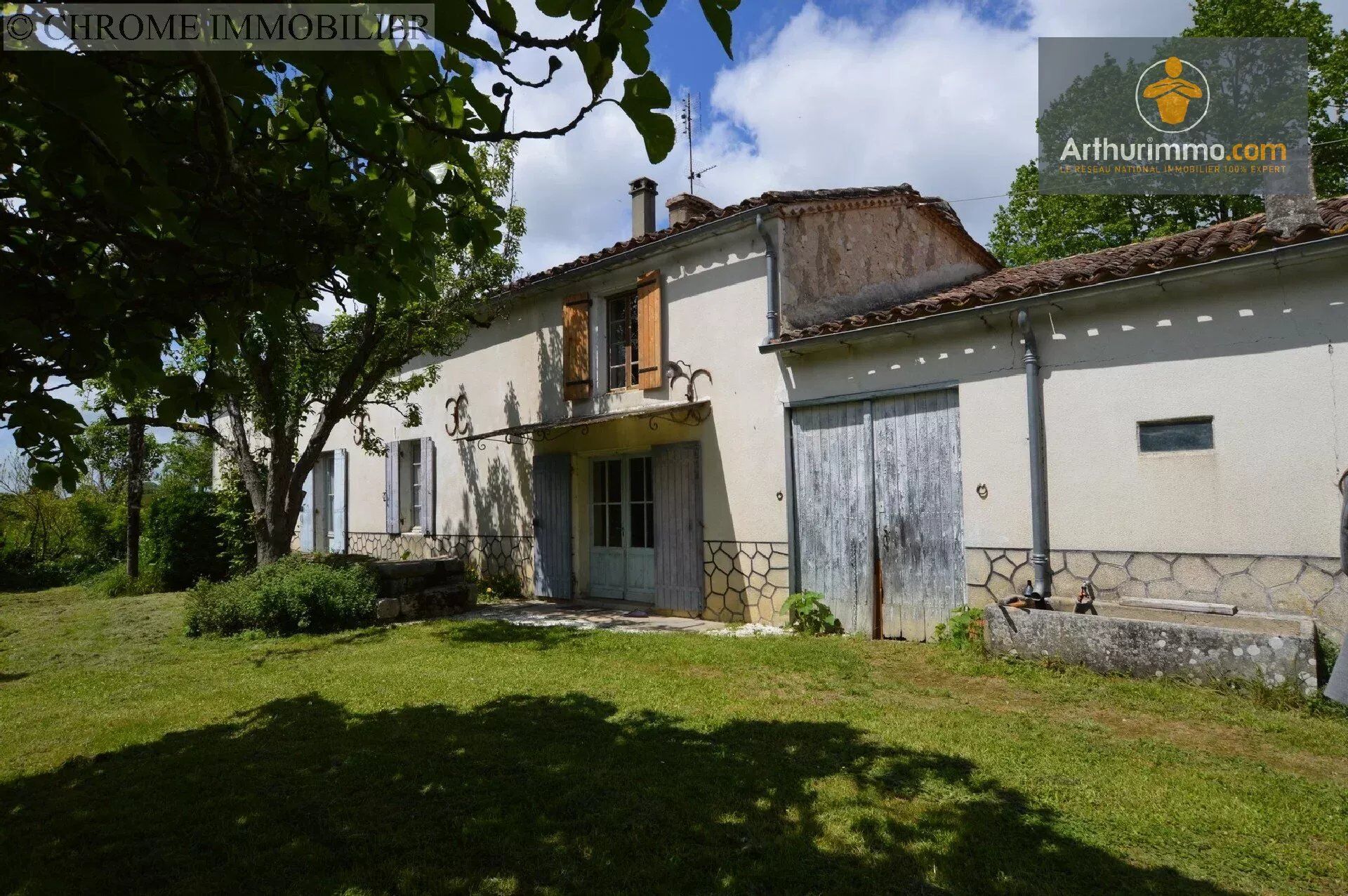
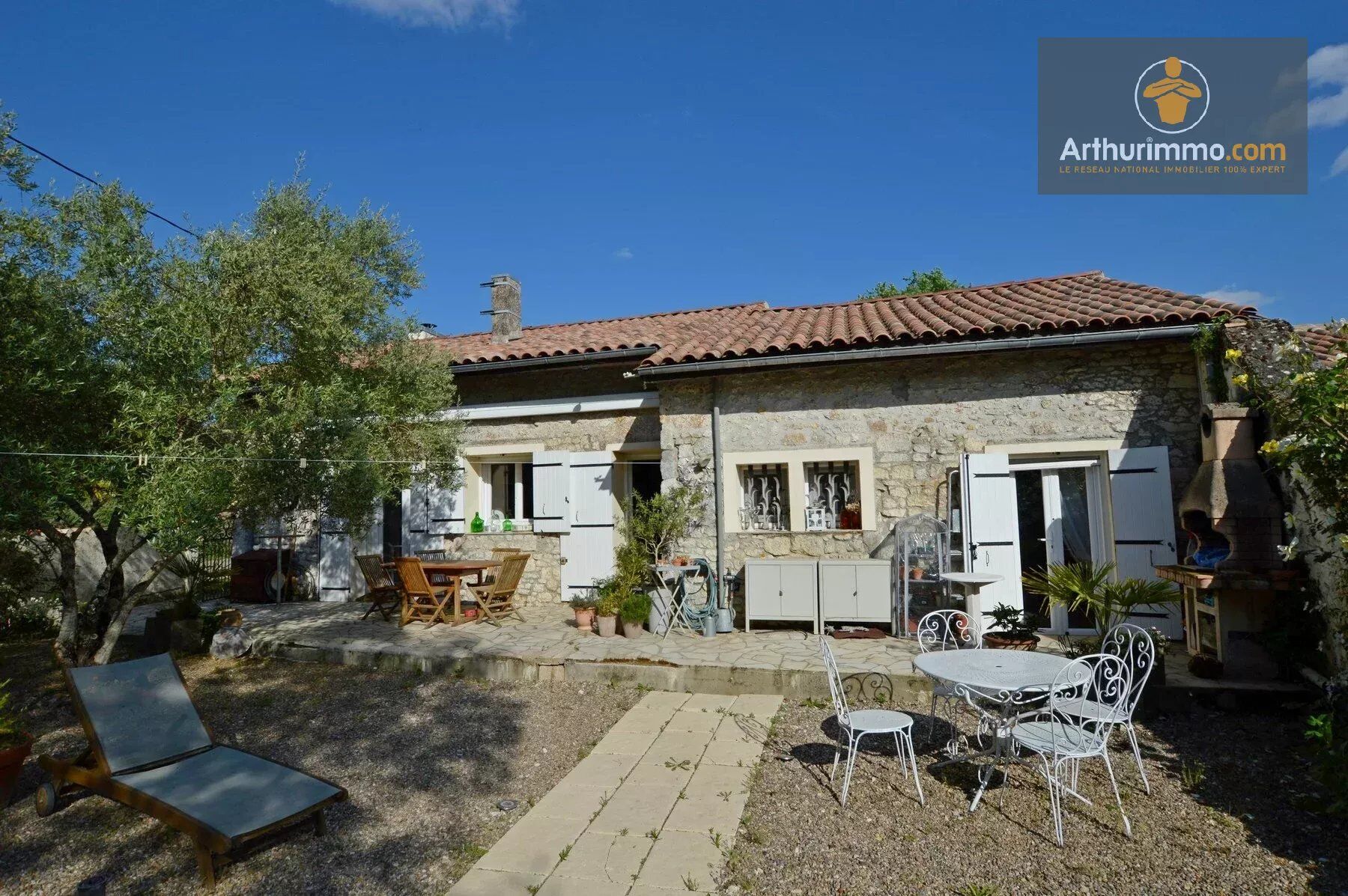
Property for sale in south west France spans a region roughly the size of a small country, and the price of an identical stone house varies threefold across it. This is a guide to where the value actually sits, what drives the differences, and how to narrow a search that starts far too wide.
At a glance
Searching for property in south west France starts too wide. The region runs from the Atlantic to the Pyrenees and from the Charente to the Spanish border — roughly the size of a small country — and the same stone farmhouse can cost three times as much at one end as the other.
Most of that difference has nothing to do with the buildings. It is about names.
This is a guide to where the value actually sits and how to narrow a search sensibly.
The price map
A rough ranking, stable over years, and the single most useful thing to know before you start looking.
Most expensive. The Périgord Noir around Sarlat, where the castles and caves are and where second-home demand has run for decades. The Bordeaux vineyards and the appellations. The Atlantic coast and the Bassin d'Arcachon. Biarritz and the Basque coast.
Mid-range. The Bordeaux hinterland, the Lot valley, the Basque foothills, the country around Toulouse.
Best value. Inland Lot-et-Garonne, the Gers, the southern Dordogne around Bergerac, the eastern Gironde, the Marmandais. Rolling farmland, vines, sunflowers, bastide towns and stone houses — visually indistinguishable from the expensive parts, at a fraction of the price.
The practical consequence: a budget that buys a modest house needing work in the Périgord Noir will often buy a substantially better one, with land, thirty to ninety minutes south-west.
What actually drives the difference
Name recognition. "Dordogne" sells. It is one of the few French départements with international brand value, and a house a kilometre inside its boundary is advertised and priced differently from an identical house a kilometre outside. This is the single largest factor and it survives no scrutiny at all on the ground.
Proximity to a famous sight. Being within sight of a great castle costs money. Being forty minutes away costs much less and gets you there whenever you like.
Coast and city. Anything within reach of the Atlantic or commutable to Bordeaux or Toulouse carries a premium.
Airport access, which is real rather than reputational, and worth paying something for.
Depth of foreign demand. Areas that have absorbed British and Dutch buyers for thirty years — Eymet is the local example — price accordingly.
Narrowing the search
The mistake almost everyone makes is filtering by département. Do it by drive time instead.
Draw a circle around the things you will genuinely use every week or every month: an airport, a town with a hospital and a supermarket, two or three markets, a station if you want one. Then look at everything inside it regardless of which name is on the listing.
That single change surfaces the best value in the region, because it ignores exactly the premium you should not be paying.
The corollary applies too: be sceptical of a listing that says "in the Dordogne" without naming the commune. The département is large, and its northern and eastern edges are an hour or more from Bergerac in country quite unlike the southern vineyards. Ask for the commune, put it on a map, and measure the drives.
What the money buys
Without quoting figures that date, the shape of the market is consistent across the inland areas.
Entry level is village houses needing work, small terraced properties without land, and barns for conversion. Genuinely cheap by northern European standards, with the renovation where the real cost lands.
The middle holds most of the market: habitable stone houses with a garden, three or four bedrooms, in a village or just outside. This is what most buyers want and where the widest choice is.
Above that, farmhouses with meaningful land, restored properties with pools, and maisons de maître. The gap between habitable and finished is wider here than buyers expect, and the market prices restoration generously.
Area by area, honestly
A short assessment of each part of the region as somewhere to buy, rather than to visit.
Périgord Noir (eastern Dordogne). The postcard, and priced as such. Castles, caves, golden stone, and the bulk of the region's tourism. Buy here if proximity to those is the point of the exercise and budget is not the binding constraint. Check the February question carefully: some villages have very high second-home proportions and empty out badly.
Périgord Pourpre (western Dordogne, around Bergerac). Wine country, a proper town with a hospital and an airport, markedly better value than the Noir, and better connected. One of the strongest all-round choices in the region.
Lot-et-Garonne. The best value of all for comparable houses and land — orchards, vines, bastides, and countryside every bit as attractive as its famous neighbour. Less well known internationally, which is precisely why it is cheaper.
Eastern Gironde. Bordeaux's quiet hinterland. Entre-Deux-Mers wine, an hour from the city, and prices well below the appellations to the west.
The Gers. Gascony proper: rolling, remote, thinly populated, Armagnac and duck. Beautiful and cheap, with the trade-off that services and airports are further away than most people expect.
The Lot. Dramatic limestone country around Cahors, more expensive than Lot-et-Garonne and less well connected, but spectacular.
The Landes and the coast. Pine forest and Atlantic beaches. Expensive near the water, cheaper inland in the forest, and a completely different landscape from the rest.
Pyrénées-Atlantiques. Basque country and Béarn — a distinct culture, mountains and ocean, and prices reflecting how much people want to be there.
Buying as a non-resident
Worth separating out, because a good proportion of buyers here are not moving full-time, at least not at first.
There is no restriction on foreign ownership, and no requirement to be resident.
Taxe d'habitation applies to second homes — it was abolished for main residences but retained for these, with a surcharge of up to 60% in communes classified as zones tendues. Most of this inland region is not, but check the commune.
Capital gains on a second home are charged on sale, with the rate tapering over years of ownership, and social charges on top. Non-EU sellers may need a fiscal representative.
Letting it out — as a gîte or through the short-let platforms — means registering the activity with the mairie, and declaring the income in France regardless of where you bank it.
Insurance must be maintained and insurers ask specifically about periods of vacancy, which changes the terms.
A French bank account is needed in practice for the utilities, taxes and standing orders, and is easier to open before completion than after.
None of it is difficult. All of it is easier to arrange deliberately than to discover.
The costs beyond the price
Notaire fees and duties at roughly 7–8% on older homes — mostly tax, not the notaire's fee.
Agency commission, usually included in the advertised figure. Confirm whether the price is FAI.
Taxe foncière annually, charged on outbuildings as well as the house. Taxe d'habitation on second homes only, with surcharges in some communes.
The fosse septique, if the property is not on mains drainage — which most rural ones are not. SPANC inspects it, and a non-compliant system becomes your responsibility.
Heating a stone house through a wet inland February, which is the running cost buyers most consistently underestimate.
What to check
There is no survey. The mandatory diagnostics cover specific hazards, not structural soundness. Commission your own building report on anything old — it is the step foreign buyers most often skip and the one that most often costs them.
The roof, which is the largest renovation item on almost every old property.
The DPE, the energy rating, which now affects what can be let and increasingly what a house resells for.
Access, boundaries and rights — shared tracks, wells, rights of way, agricultural leases. The notaire surfaces the registered ones; ask about the rest and walk the boundary.
The artisan queue. Good builders and roofers across the region are booked months ahead. A cheap house needing a roof is only cheap if someone will come and do it.
The process
The compromis de vente is the binding preliminary contract, signed early, with a short statutory cooling-off period for the buyer. Any condition you need — a mortgage, a satisfactory building report, a planning answer — must be written in as a condition suspensive, because it cannot be added later.
The notaire acts for the transaction rather than for you, though you may appoint your own at no extra cost with the fee split.
Completion follows two to three months later.
Inheritance is decided at purchase. French succession law reserves a share of an estate for children regardless of a will, and the ownership structure chosen at signing has long consequences. Anyone with a blended family needs advice before the compromis.
Where to look, and who to ask
The market here works differently from a British or Dutch one, and knowing how changes what you find.
Mandats simples are the norm. Most French vendors instruct several agents without exclusivity, so the same house appears on multiple sites under different references, different photographs and occasionally different prices. A hundred listings is not a hundred houses. Learning to recognise a repeat by its surface area and its outbuildings saves a great deal of time.
The big portals carry the widest inventory and the worst filtering. They are the place to establish what exists and a poor place to make decisions.
Local agents hold stock that never reaches the portals, particularly at the lower end, and they know which vendors are serious. Registering with two or three in the area you have settled on is worth far more than watching a national site.
Notaires sell property too, which surprises foreign buyers. Their listings are often unglamorous and sometimes good value.
Private sales — de particulier à particulier — exist, usually cheaper because no commission is built in, and require more care since nobody is managing the process for you.
The village itself. In rural France a surprising amount changes hands before it is ever advertised. Mentioning to a baker, a neighbour or the mairie that you are looking is a genuinely effective method, and it is how a good many of the best purchases here happen.
Ask about what has not sold. A house that has sat on the market for two years usually has a reason attached, and knowing it is worth more than the listing.
Where the Duras area sits
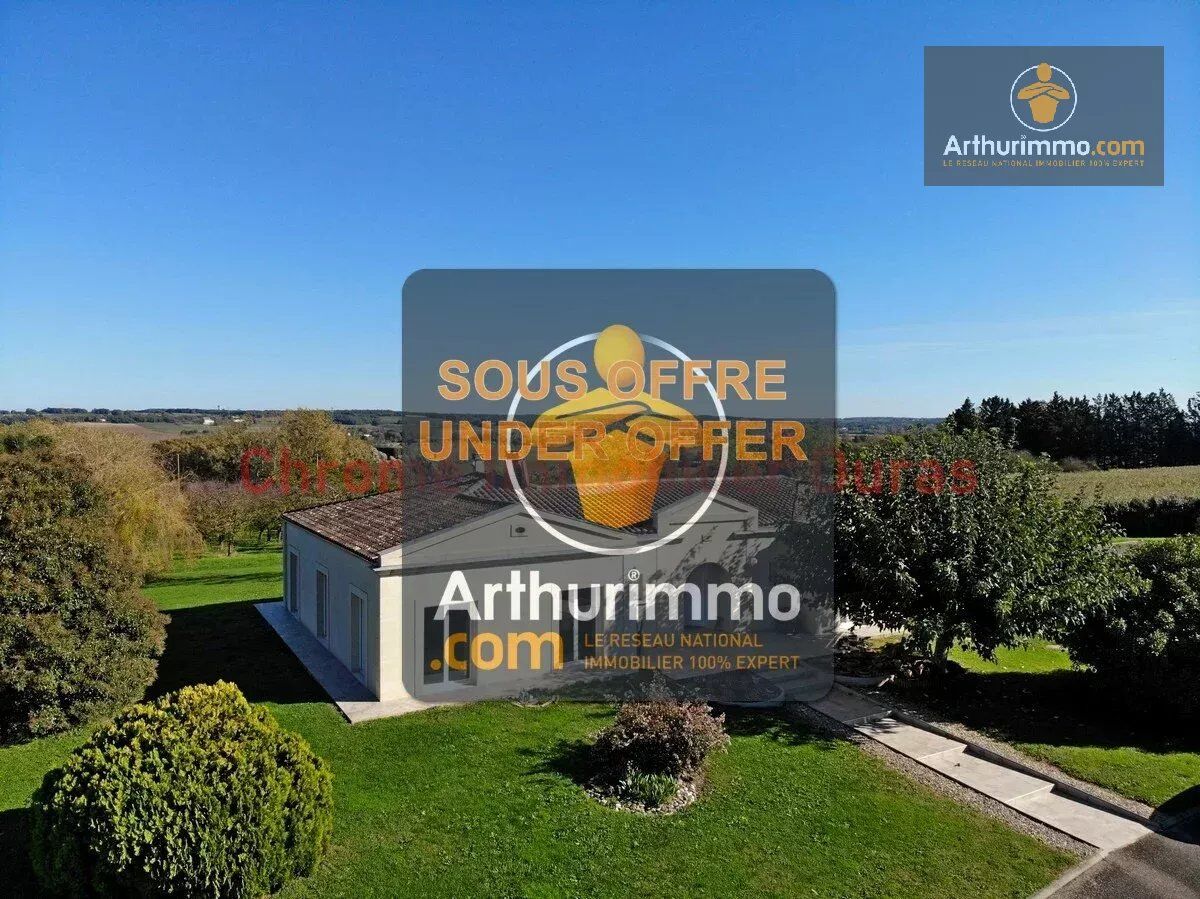
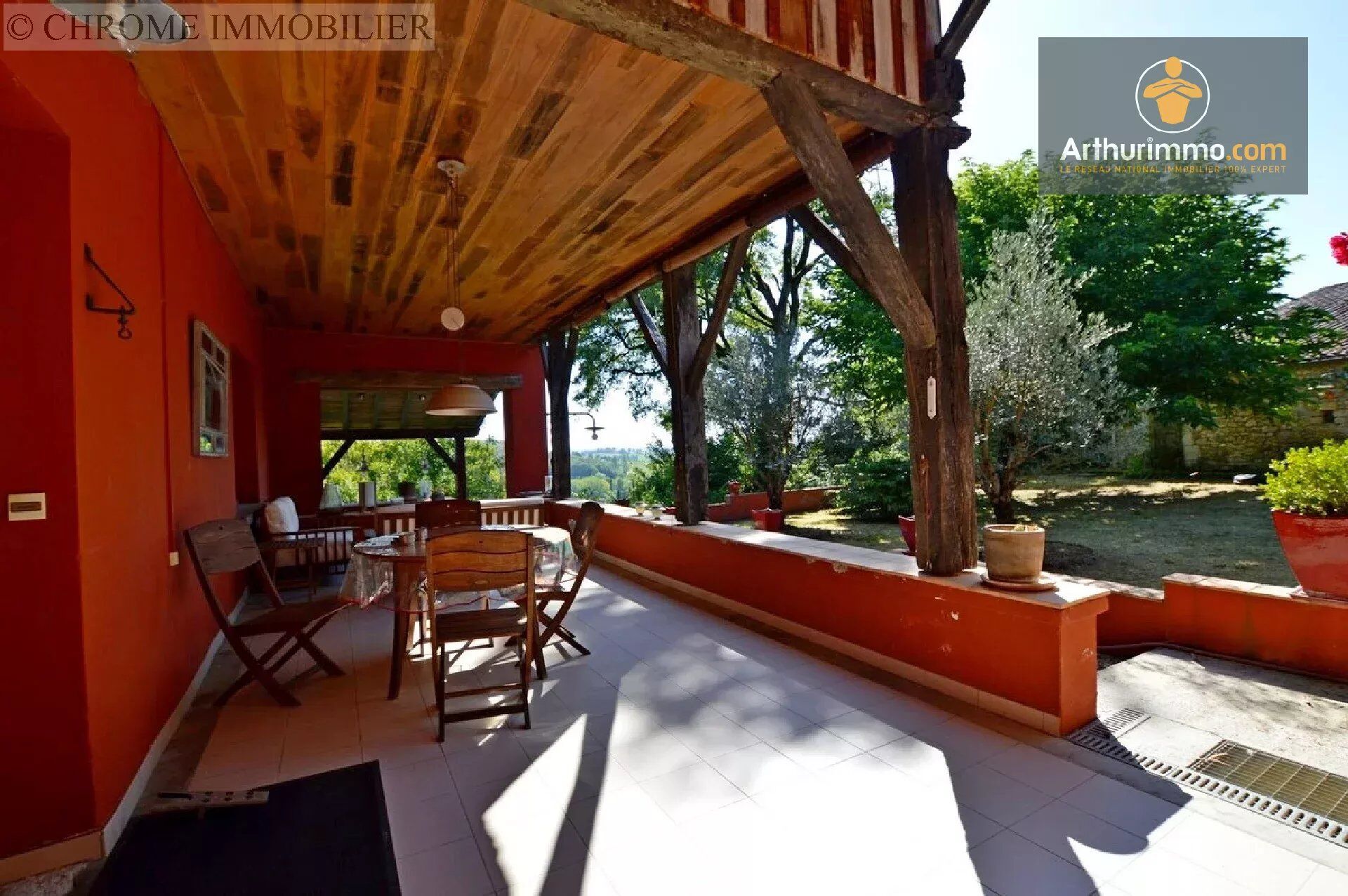
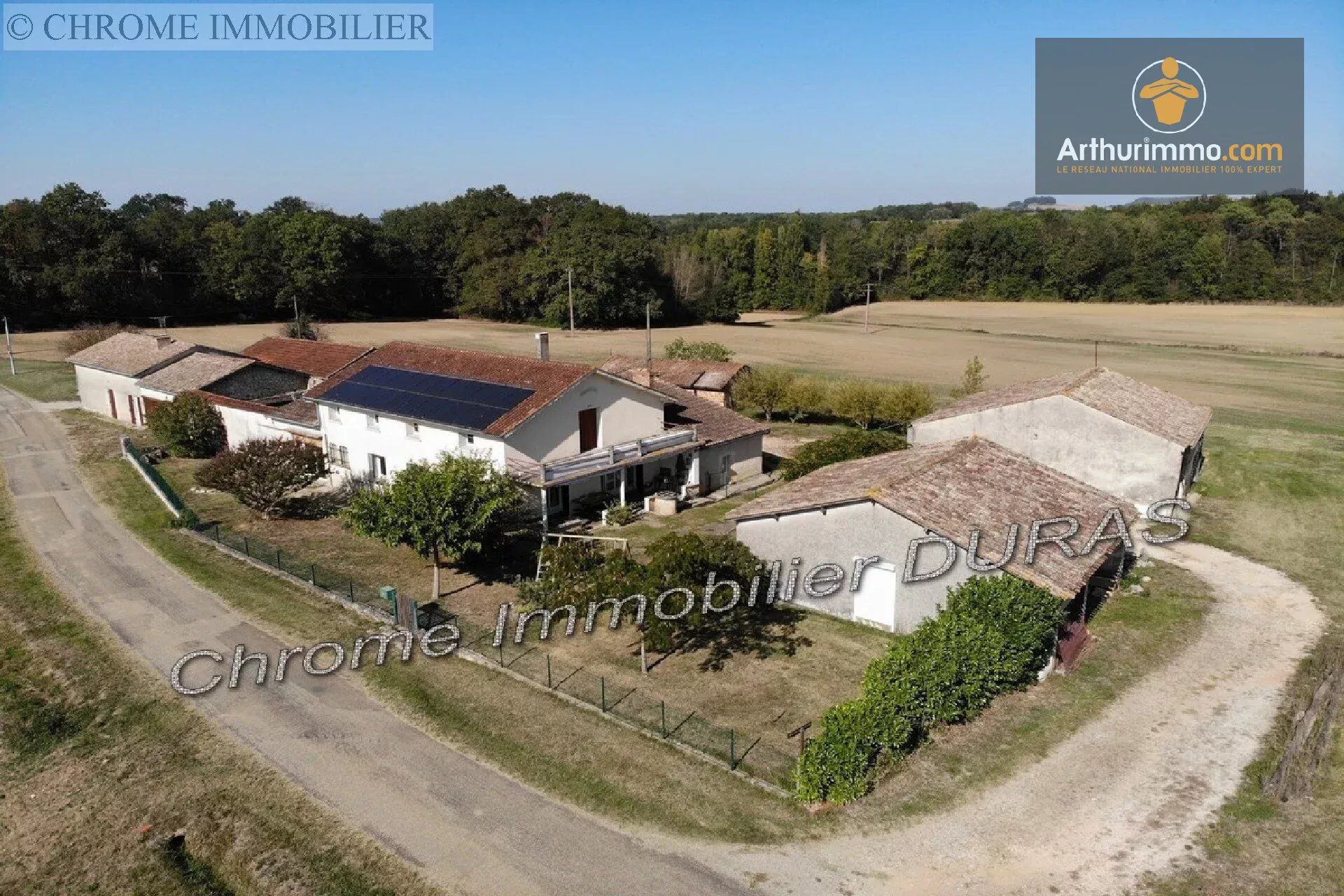
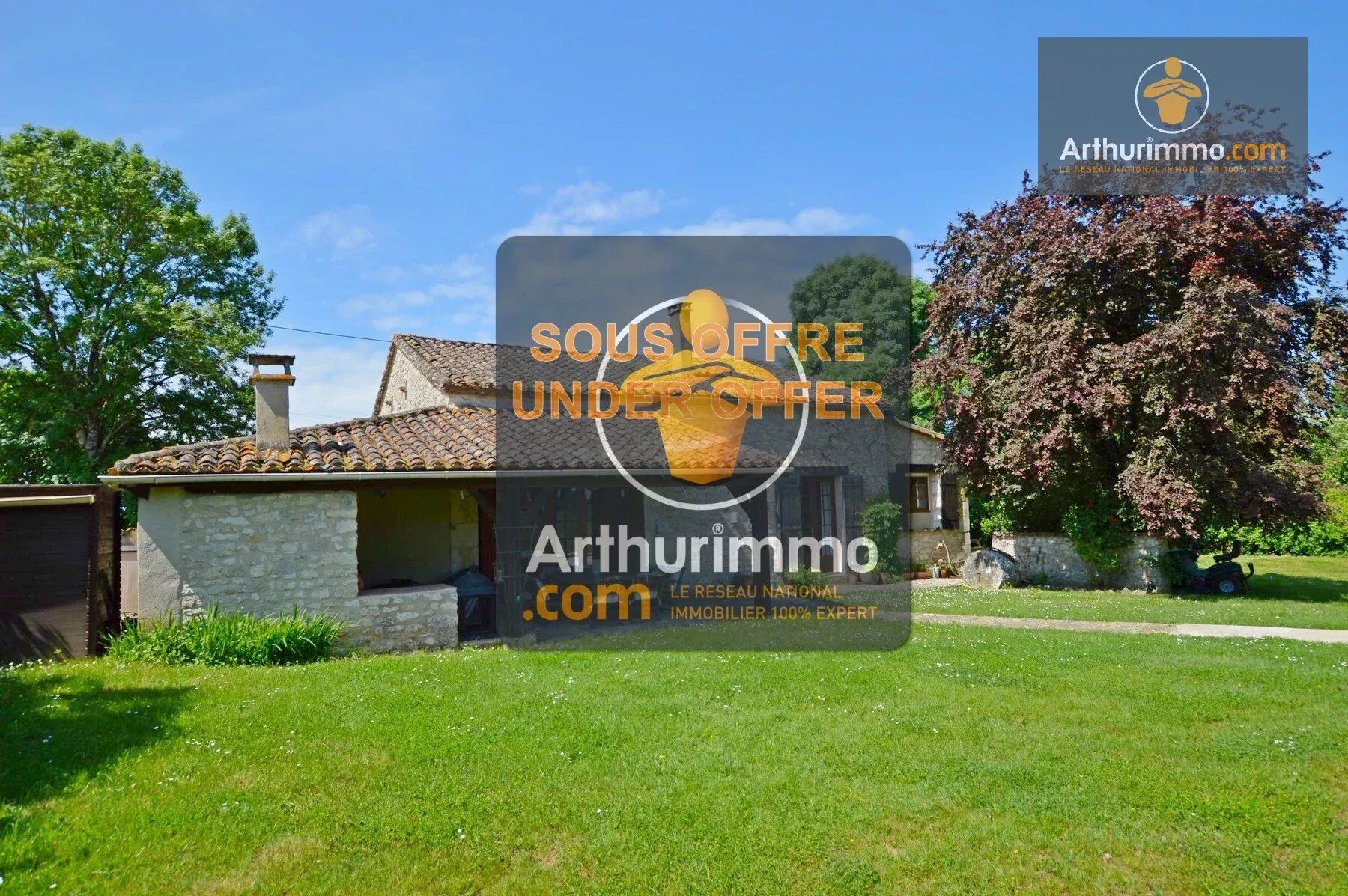
The country framed by Sainte-Foy-la-Grande, Bergerac, Villeréal, Lauzun and Marmande sits inside the value band while keeping the access of somewhere considerably dearer, which is an unusual combination and the practical reason to look here.
Three départements meet in this pocket — Lot-et-Garonne, the Dordogne and the Gironde — so prices vary sharply across distances that mean nothing on the ground. The same Dropt valley, the same limestone, the same vines, three sets of listings and three price levels.
The access does not match the prices. Bergerac and its airport are about thirty-five minutes. Bordeaux — the city, the airport, the TGV to Paris in around two hours — is an hour and a quarter. Saint-Émilion the same. Sarlat and the Dordogne valley castles ninety minutes. The Atlantic coast around two hours. Everything famous in the region is a day trip, and none of it is on your doorstep putting up your prices and filling your village in August.
The towns here have genuine year-round populations rather than shuttered second homes, which matters more than any amount of summer charm. The bakeries open in February and the schools run. There is a British and Dutch community decades deep but not concentrated, so you are neither isolated nor insulated.
The listings above are a live selection from this area. Whatever you conclude about where to buy, the advice that matters most is the same everywhere: rent for a season first, and make sure it includes a February. A June visit tells you the region is beautiful. Winter tells you whether you would be content there, and that is the question that decides whether people stay.
If you want a straight assessment of what a particular budget buys in this part of the south-west, Tina lives in the Duras area, works in local property, and will give you one in your own language.
Why this matters if you're looking at Duras
The Duras area sits in the value band with the access of somewhere dearer. Tina lives there and works in local property.
Frequently asked questions
Where is the best value property in south west France?
Why is the Dordogne more expensive?
What are the buying costs in France?
Do I get a survey?
Can foreigners buy property in France?
Should I search by département?
How long does buying take?
Is now a good time to buy?
Sources & last reviewed
Last reviewed: 28 August 2026. Rules, rates and figures change — always confirm the current position with the official source before you act.