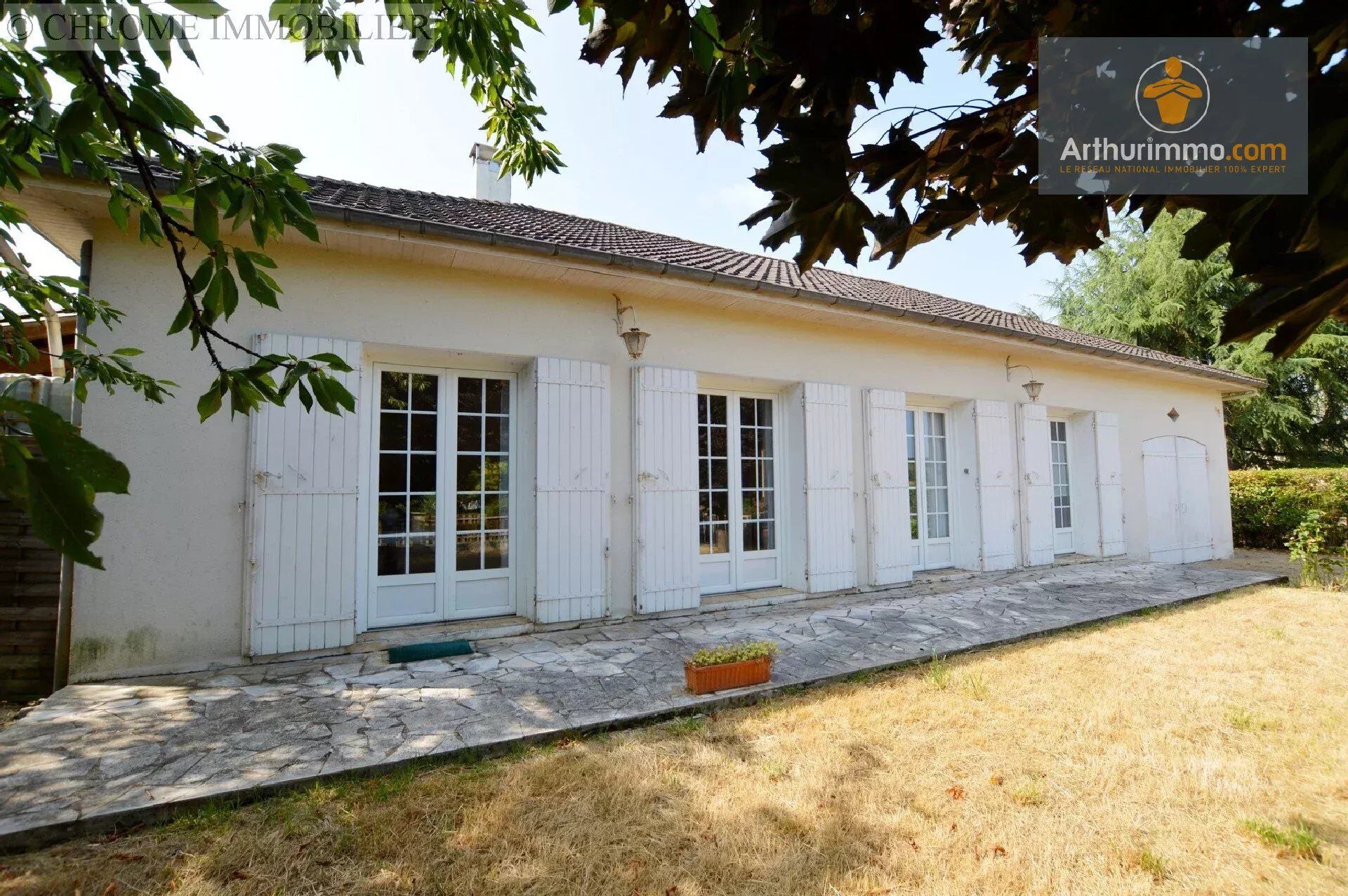
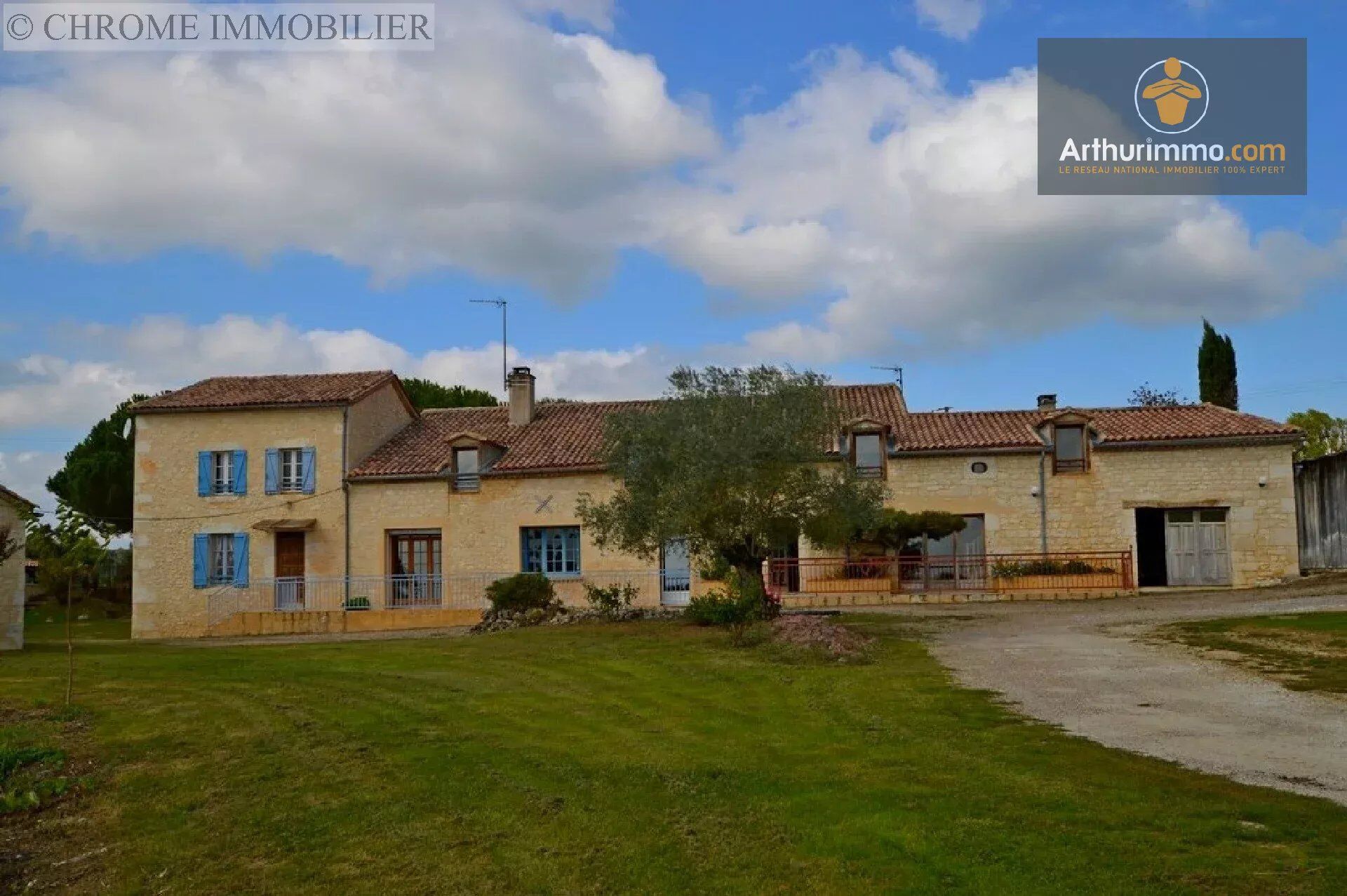
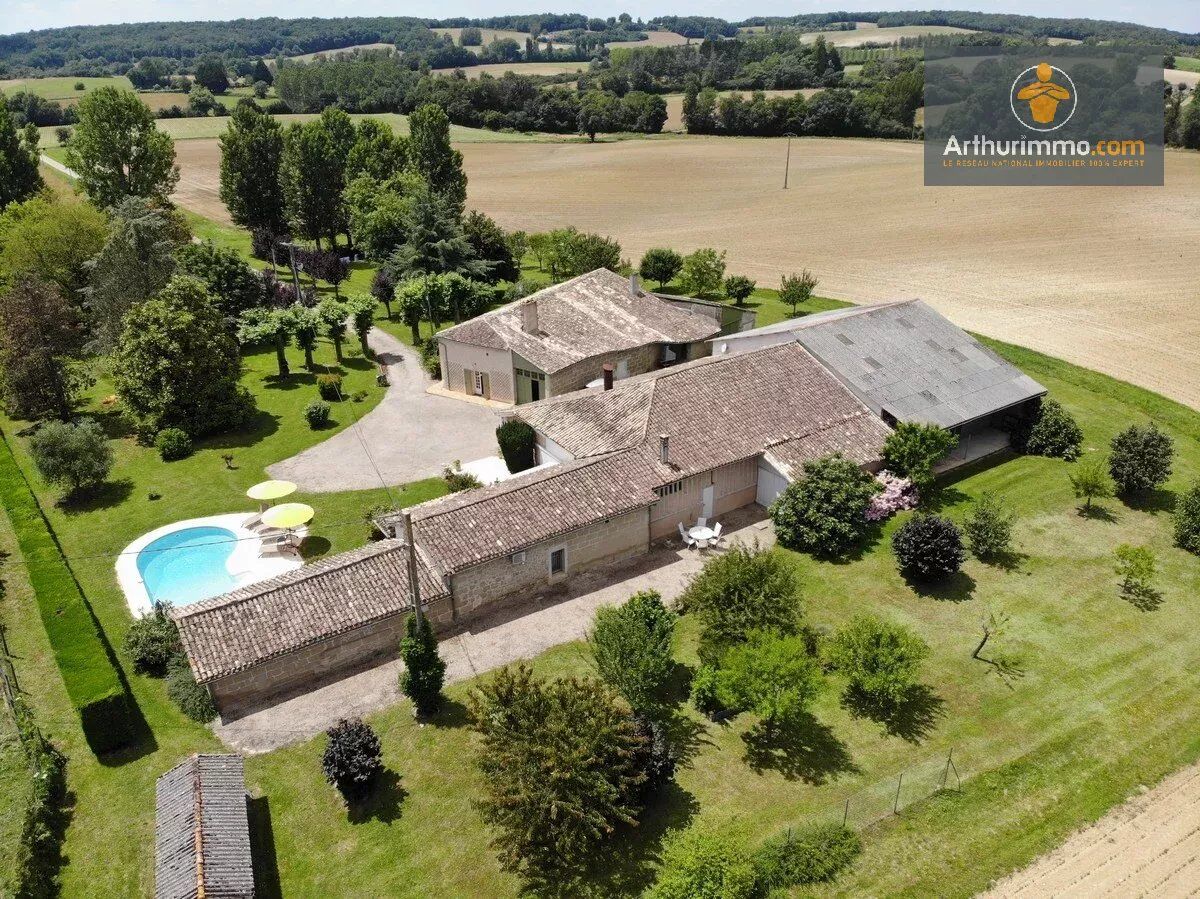
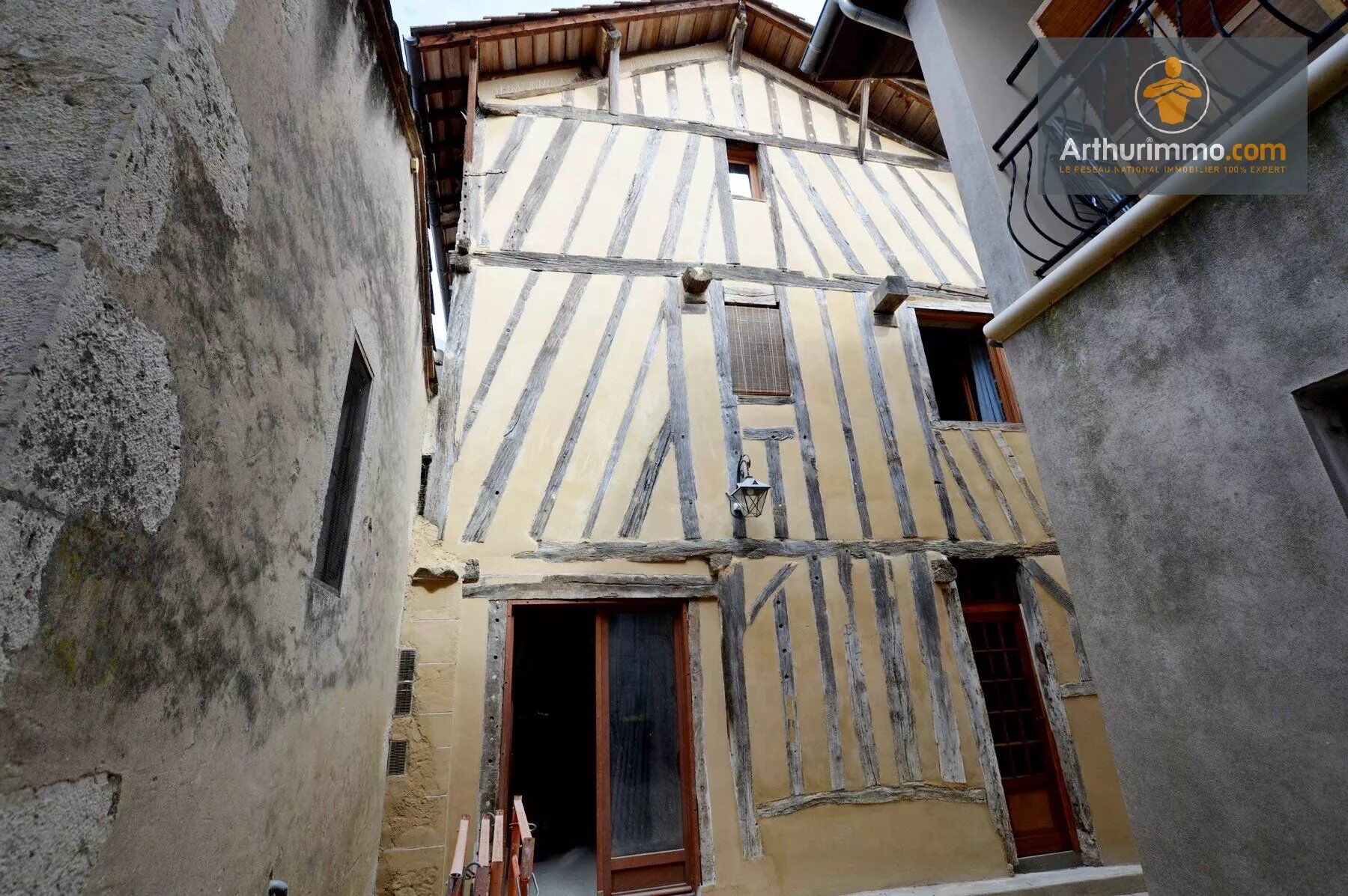
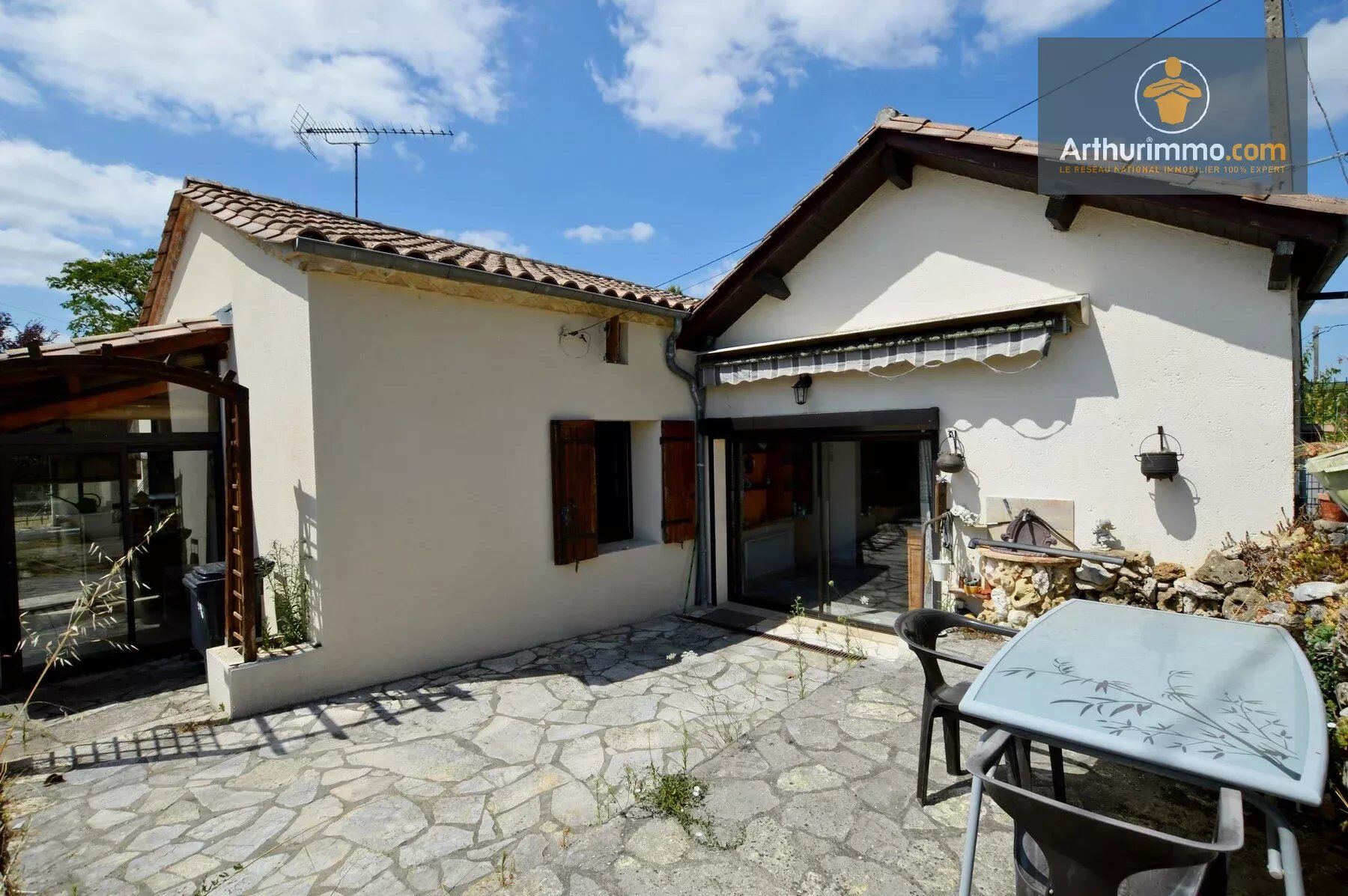
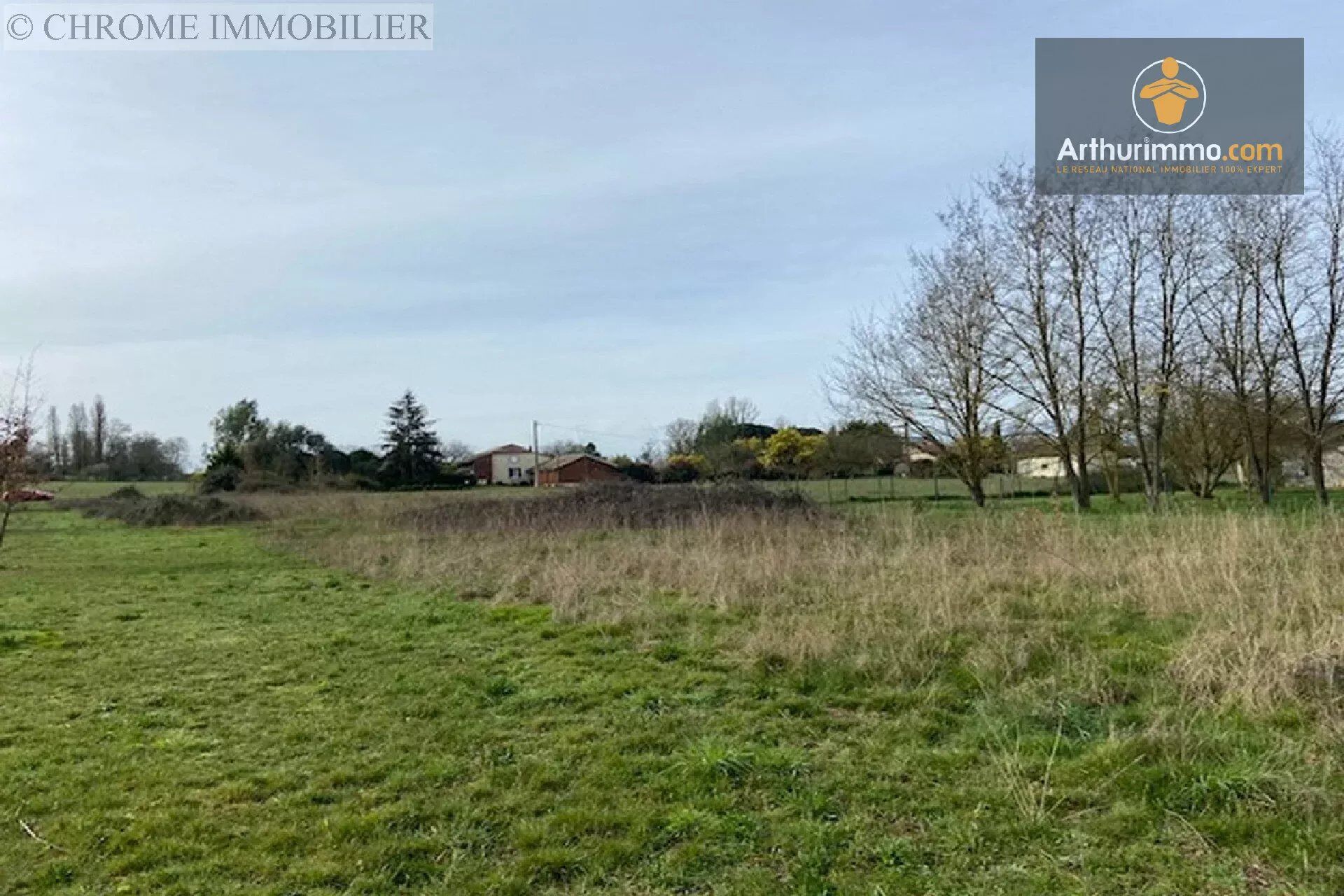
Property for sale in Eymet attracts more foreign buyers than almost anywhere else of its size in south-west France, and the stock in the bastide itself is thin. This is an honest guide to what your money buys in Eymet and the villages around it, what the process costs, and what to check before you offer.
At a glance
Eymet has been on the radar of British and Dutch buyers for decades, and that shows in both the price and the availability. It is a small thirteenth-century bastide with an arcaded square, a large Thursday market, and one of the highest concentrations of foreign residents anywhere in rural France.
It also has, at any given moment, a fairly small number of houses for sale. That is the first thing to understand about searching here: the bastide itself is a limited market, and the answer is almost always the area rather than the town.
This is a guide to what is actually available, what it costs, and what to check.
What the market looks like
Eymet's stock divides into a few recognisable categories.
Village houses in and around the bastide — often terraced, stone-built, sometimes with a courtyard rather than a garden. Walkable to the square and the market, which is exactly what a certain kind of buyer wants, and priced accordingly.
Farmhouses with land in the surrounding countryside, from modest to substantial, frequently needing work. This is where most of the value sits and where most people end up.
Maisons de maître — the tall, square, symmetrical houses of the nineteenth-century bourgeoisie, with high ceilings and a formal layout. Handsome, expensive to heat, and the category most likely to be over-improved.
Building plots and barns, for anyone wanting to convert or build. The permissions question here is real and worth investigating before, not after.
Where the value actually is
Prices in Eymet carry a premium that has little to do with the fabric of the buildings. It is a reputation premium, built over thirty years of foreign demand, and it is entirely rational — you are paying for an established community and the ability to sort out a tax form in your own language.
What that means practically: the same stone farmhouse, on the same kind of land, in the same rolling countryside, costs measurably less twenty minutes away.
The villages worth looking at alongside Eymet are Allemans-du-Dropt, Lévignac-de-Guyenne, Duras and Monségur, along with the hamlets scattered between them. All sit in the same Dropt valley landscape. All are within half an hour of Bergerac and its airport. None carries Eymet's name premium.
Some of those cross an administrative line into Lot-et-Garonne or the Gironde, which is largely why they are cheaper — "Dordogne" sells, and a kilometre of countryside does not change what you are buying.
What buying actually costs
The advertised price is not the price.
Notaire fees and duties run to roughly 7–8% on older properties. The overwhelming majority is tax and registration duty collected by the notaire on the state's behalf rather than their fee, which stops the number feeling like a rip-off once you know it.
Agency commission is usually included in the advertised figure, but always confirm whether the price is FAI — frais d'agence inclus — or not.
The taxe foncière is the annual owner's tax, payable regardless of residency. Taxe d'habitation now applies only to second homes, and some communes add a surcharge.
Ongoing costs on a rural property with land are easy to underestimate: heating a stone house through a wet February, maintaining outbuildings, and the septic system.
What to check before offering
The diagnostics dossier
You will be given a set of mandatory reports — energy performance (DPE), asbestos, lead, termites, electrical and gas installations, and the septic tank. Read all of them. The DPE in particular now has consequences for what can be let out, and it affects resale on poorly insulated stone houses.
The fosse septique
The single most expensive surprise in rural French property. Most houses out here are not on mains drainage, and SPANC inspects the installation. A non-compliant system becomes your problem, generally within a defined period after purchase, and replacing one is a serious cost.
There is no survey
Nothing in the French process assesses structural soundness. The diagnostics cover specific hazards, not whether the roof will last. On any older building, commissioning your own report from a builder or an architect is money well spent, and it is the step foreign buyers most often skip.
The artisan queue
A cheap house that needs a roof is only cheap if someone will come and put one on. Good builders, roofers and plumbers across this region are booked months ahead. Before committing to a renovation, find out who would actually do it and when.
Boundaries, access and rights
Rural plots carry complications that town buyers never meet: shared tracks, wells, rights of way, agricultural leases on land, and boundaries that were agreed verbally three generations ago. The notaire will surface the registered ones; ask specifically about the rest.
Reading a French listing
The advertisements follow conventions that mislead if you read them as British ones.
Surface is habitable surface — surface habitable, measured under the Carrez rules. It excludes cellars, attics under 1.8m, garages and outbuildings. A farmhouse advertised at 140m² may have another hundred of barn attached that simply does not count.
Pièces, not bedrooms. T4 or 4 pièces counts habitable rooms excluding kitchen and bathroom, so it is not the same as four bedrooms. Chambres is the bedroom count.
Terrain is the land, given in square metres. A hectare is 10,000m², and rural listings often carry more land than buyers realise they are taking on maintaining.
DPE letters run A to G. Anything at F or G is now materially harder to let and increasingly a lever in negotiation.
Prix FAI means agency fees included. Hors frais de notaire means the 7-8% is on top — which it always is.
Travaux à prévoir — work to be expected — is doing a great deal of quiet work in a sentence, and à rafraîchir rarely means only redecoration.
Photographs deserve the same scepticism as anywhere: count the windows against the rooms, look for what is not photographed, and note whether every shot is taken in summer.
What the money buys, roughly
Without quoting figures that will date, the shape of the market is stable and worth knowing before you start looking.
At the entry level sit village houses needing work, small terraced properties without land, and barns for conversion. These are genuinely cheap by northern European standards and the renovation is where the real cost lands.
In the middle sits the bulk of the market: habitable stone houses with a garden, three or four bedrooms, in a village or just outside it. This is what most buyers are actually looking for and where the widest choice is.
Above that come farmhouses with meaningful land, restored properties with pools, and maisons de maître. The gap between a house that is habitable and one that is finished is wider here than buyers expect, and the market prices restoration generously.
The consistent pattern across all three bands: the same building costs less the further you move from a name people recognise. Eymet carries a premium over Allemans-du-Dropt; Allemans carries one over a hamlet nobody has heard of; and the Périgord Noir carries a large one over all of them.
The process, briefly
The compromis de vente is the binding preliminary contract, signed early. A short statutory cooling-off period follows for the buyer, after which the deposit is generally at risk. Any condition you need — a mortgage, a satisfactory building report, a planning answer — must be written into it as a condition suspensive, because it cannot be added later.
The notaire acts for the transaction rather than for you, though you may appoint your own at no extra cost, with the fee split between them. Many foreign buyers do, and it is usually worth it.
Completion — the acte de vente — typically follows two to three months later, most of which is the notaire's searches.
Inheritance is decided at purchase, not afterwards. French succession law reserves a portion of an estate for children regardless of a will, and the ownership structure you choose at signing has long consequences. Anyone with a blended family or particular intentions needs advice before the compromis, not after completion.
Financing and moving money
Two practicalities that catch buyers out more often than the property itself.
French mortgages are available to non-residents and the rates have historically been competitive, but the lending criteria are stricter and more formulaic than in the UK. French banks work to a debt-to-income ratio applied across all your borrowing worldwide, and they are far less interested in equity or assets than in provable monthly income. Approvals take longer than buyers expect, which is why a mortgage condition in the compromis is not optional.
Currency is the cost nobody budgets for. On a purchase of any size, the difference between a high-street bank's exchange rate and a specialist broker's is a meaningful sum — frequently more than the building report you decided to skip. Fixing a rate forward once you have signed the compromis removes the risk that three months of currency movement eats your renovation budget.
A French bank account is needed for the utilities, the taxes and the standing orders, and opening one is easier before you complete than after.
Renting first
The advice everyone here gives and few buyers take.
Rent for a season before you buy — and make sure that season includes a February. Off-season lets on gîtes are widely available from October through April at rates far below the summer week, because owners would rather the place were occupied and heated than empty.
A fortnight in June tells you the region is beautiful, which you already knew. A wet Tuesday in February tells you whether the village has an open bakery, whether there is anyone in the bar, and whether the quiet reads as peace or as isolation. That is the question that decides whether people stay for a decade or sell after three years, and it costs a few weeks' rent to answer honestly.
It also lets you look at houses without a deadline, which is the single biggest advantage a buyer can have in a market this thin.
Living in Eymet, honestly
The community is the whole conversation, and it cuts both ways.
For someone arriving in later life without French, Eymet is genuinely enabling. There are clubs and networks already running, help available in English with a complicated administrative problem, and a square where you will recognise people within a month.
For someone wanting full immersion, it can feel like arriving somewhere you have not quite left. The usual resolution is geographic: live a few kilometres out in a French village, and use Eymet for the market, the shops and the company when you want it. That arrangement is extremely common and it works well.
Eymet also passes the test that matters. It has a genuine year-round population, so the bakery opens in February, the school runs and the market continues. A great many prettier villages do not.
Widening the search into the Duras area
If you have been looking at Eymet and finding the prices hard to justify against what you get, the answer is usually not to compromise on the house. It is to widen the circle.
The country framed by Sainte-Foy-la-Grande, Bergerac, Villeréal, Lauzun and Marmande — with Duras at its centre — is the same Dropt valley, the same limestone, the same vineyards and the same light. Three départements meet in it, which is why the prices differ so sharply across distances that mean nothing on the ground.
The practical case is straightforward. Bergerac and its airport are about thirty-five minutes. Bordeaux is around an hour and a quarter. Eymet itself is twenty minutes, so its Thursday market and its English-speaking square remain available whenever you want them — which is arguably the ideal relationship to have with it. Duras has its own Monday market, a substantial medieval castle above the town, and the Côtes de Duras vineyards on the doorstep.
There is a British and Dutch community here decades deep, but not concentrated enough that daily life stops happening in French. For most people that turns out to be the configuration they actually wanted: somebody who can explain the tax form, and every reason to be talking to French neighbours rather than only to them.
And the money goes considerably further. The same budget that buys a modest house needing work in Eymet will often buy a substantially better one, with more land, twenty minutes west.
The listings above are a live selection from Eymet and the villages around it. If you want to talk through what a particular budget actually buys in this area — including the parts of the process that are easy to get wrong — Tina lives in the Duras area, works in local property, and will give you a straight answer in your own language.
Why this matters if you're looking at Duras
The Duras area, twenty minutes from Eymet, is where the same houses cost noticeably less. Tina works in local property and knows both sides of that line.
Frequently asked questions
How much does property cost in Eymet?
Is there much property for sale in Eymet itself?
What are the buying costs in France?
Do I need a survey?
What is the fosse septique problem?
Can foreigners buy property in France?
What is a compromis de vente?
Should I buy in Eymet or nearby?
Sources & last reviewed
Last reviewed: 28 August 2026. Rules, rates and figures change — always confirm the current position with the official source before you act.