
The best time to visit southwest France depends entirely on what you are coming for, and the honest answers are not the obvious ones. August is the worst month and the liveliest. February tells you the most. This is a month-by-month account of weather, crowds, prices, what is open and what is happening.
At a glance
There is a short answer and a long one. The short answer is that June and September are the best months to visit southwest France, and if you are thinking of living here you should come in February instead.
The long answer is that this region has an unusually pronounced year — a real summer, a real winter, and a working agricultural calendar underneath both — and matching your visit to what you actually want makes a considerable difference.
The shape of the year
Three cycles run at once here and it is worth separating them.
The weather cycle is oceanic with a continental edge: Atlantic systems reaching inland, but hotter summers and cooler winters than the coast. Summers are properly hot, winters are mild and wet rather than cold.
The tourist cycle is extremely concentrated. The season builds from Easter, peaks hard in late July and August, and falls away through October. Outside that window the region belongs to the people who live in it.
The agricultural cycle is the one visitors miss and residents live by. Pruning in winter, budburst in spring, the vines' flowering in early summer, the vendange in early autumn, walnut and plum harvests after. It determines what is in the markets, what growers are doing, and what the countryside looks like.
Month by month
January
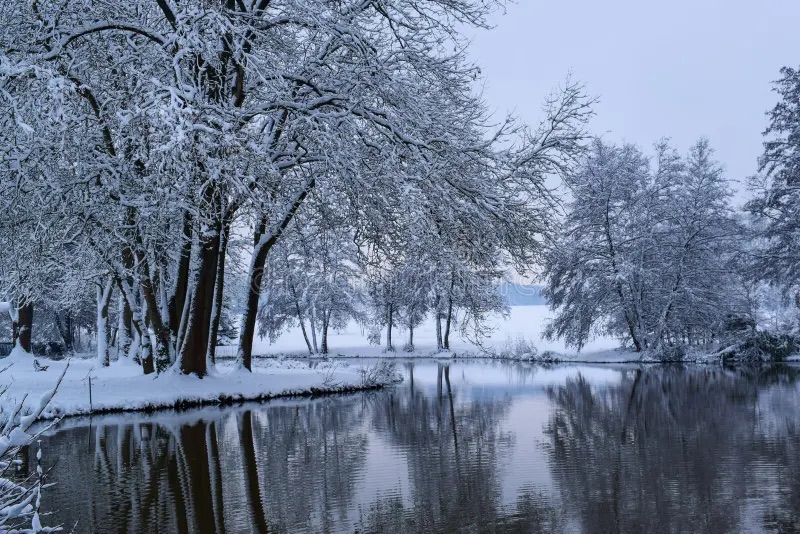
Quiet, damp, and honest. The vines are bare and pruning is under way — you will see small fires in the rows. Many rural restaurants are closed and villages can feel empty on a wet afternoon.
What works: markets, walking with the leaves down, the larger towns, long lunches, and châteaux and caves on reduced hours with nobody else there.
February
The most useful month if you are assessing the region rather than holidaying in it. This is when you learn which towns have a genuine year-round population — open bakery, working bar, functioning school — and which effectively close.
Weather is variable and often grey. But the first almond blossom appears late in the month, and there is a particular quality to a village that is quietly getting on with its own life.
March
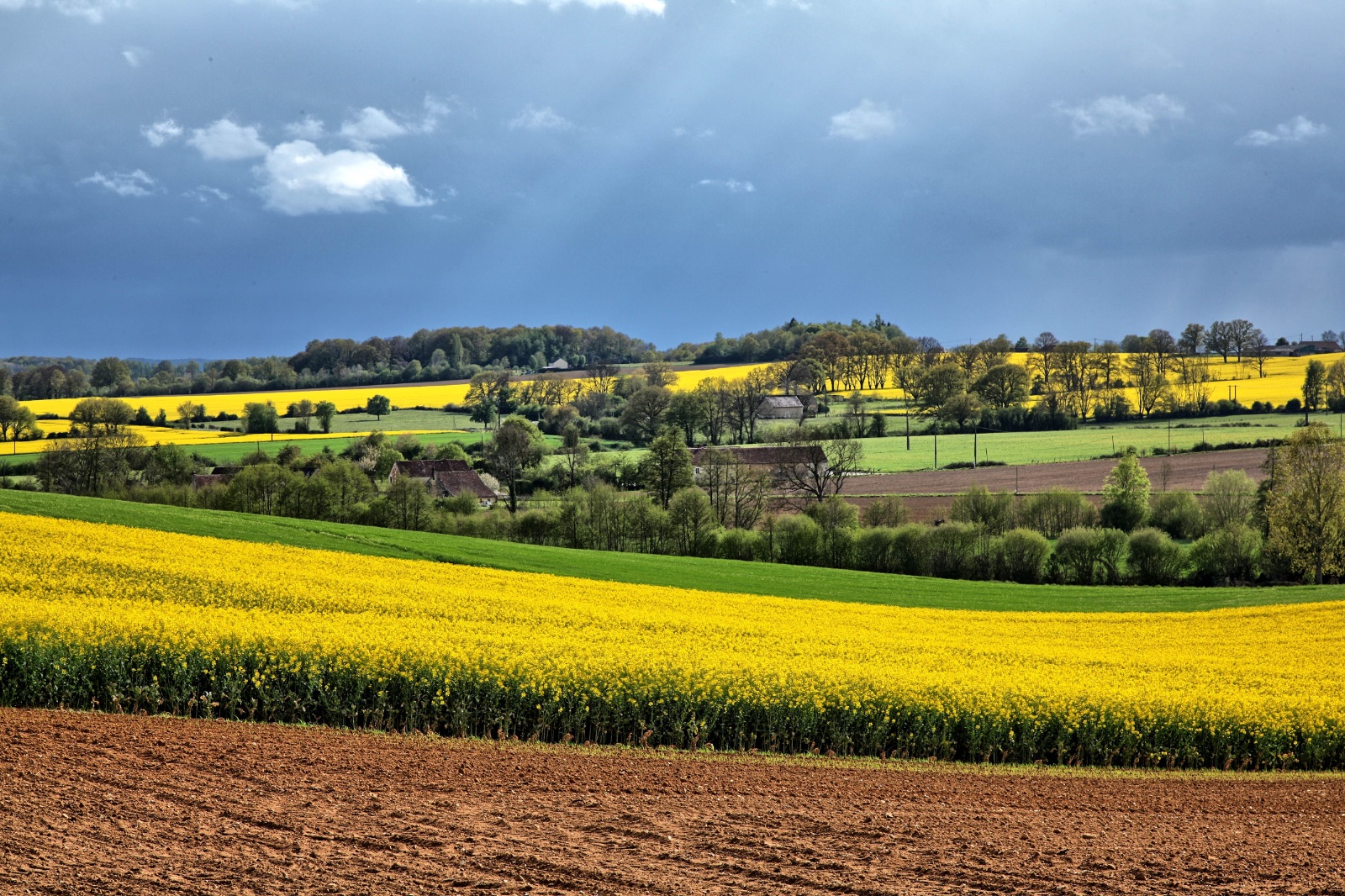
The turn. Days lengthen noticeably, early blossom comes through, and businesses begin reopening towards the end of the month. Still unsettled, still quiet, and prices are at their lowest.
April
Genuinely lovely and slightly unreliable. The countryside greens up fast, orchards blossom, and most attractions reopen for Easter. Weather can swing from shirtsleeves to rain within a day. Spring frost is the growers' great fear and you may see them out at dawn with candles or wind machines among the vines.
May
One of the two best months. The countryside is at its greenest, everything is open, the weather is usually settled without being hot, and the crowds have not arrived. Public holidays cluster in May, so some days are quiet in a French rather than a deserted way.
If you want to see the region at its most beautiful, this is it.
June
Arguably the best month overall. Long days, reliable warmth, everything open and running, and still comfortably before the August compression. The vines flower, which is the moment that sets the year's crop. Night markets begin in some villages towards the end of the month.
July
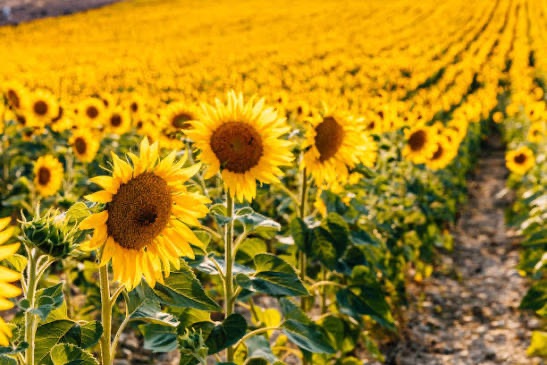
Hot, busy in the famous places, manageable elsewhere. The events calendar picks up — fêtes, night markets, open-air concerts, castle events. Rivers and lakes come into their own.
The pattern that works is to be out early, at water or in shade at midday, and out again in the evening.
August
The most concentrated month of the year in every sense. The famous strip — Sarlat, the Dordogne valley, Saint-Émilion — is at its busiest, car parks fill by mid-morning, and restaurants need booking. It is also hot, frequently very hot.
At the same time, this is when rural France is at its most sociable. Village fêtes run every weekend, night markets fill squares with long communal tables, and the whole country is on holiday together.
A significant number of local businesses close for their own August break, which catches people out.
Come in August for the atmosphere, not for the sightseeing.
September
The other best month, and the connoisseur's choice. The heat eases, the crowds leave abruptly in the first week, everything is still open, and the vendange begins. The countryside is at its most interesting — tractors everywhere, growers exhausted and talkative, the smell of fermentation drifting out of cellars.
October
Often excellent well into the month. Warm days, spectacular light across the turning vines, markets at their autumn best with walnuts, mushrooms and game arriving. Attractions begin closing towards the end of the month.
November
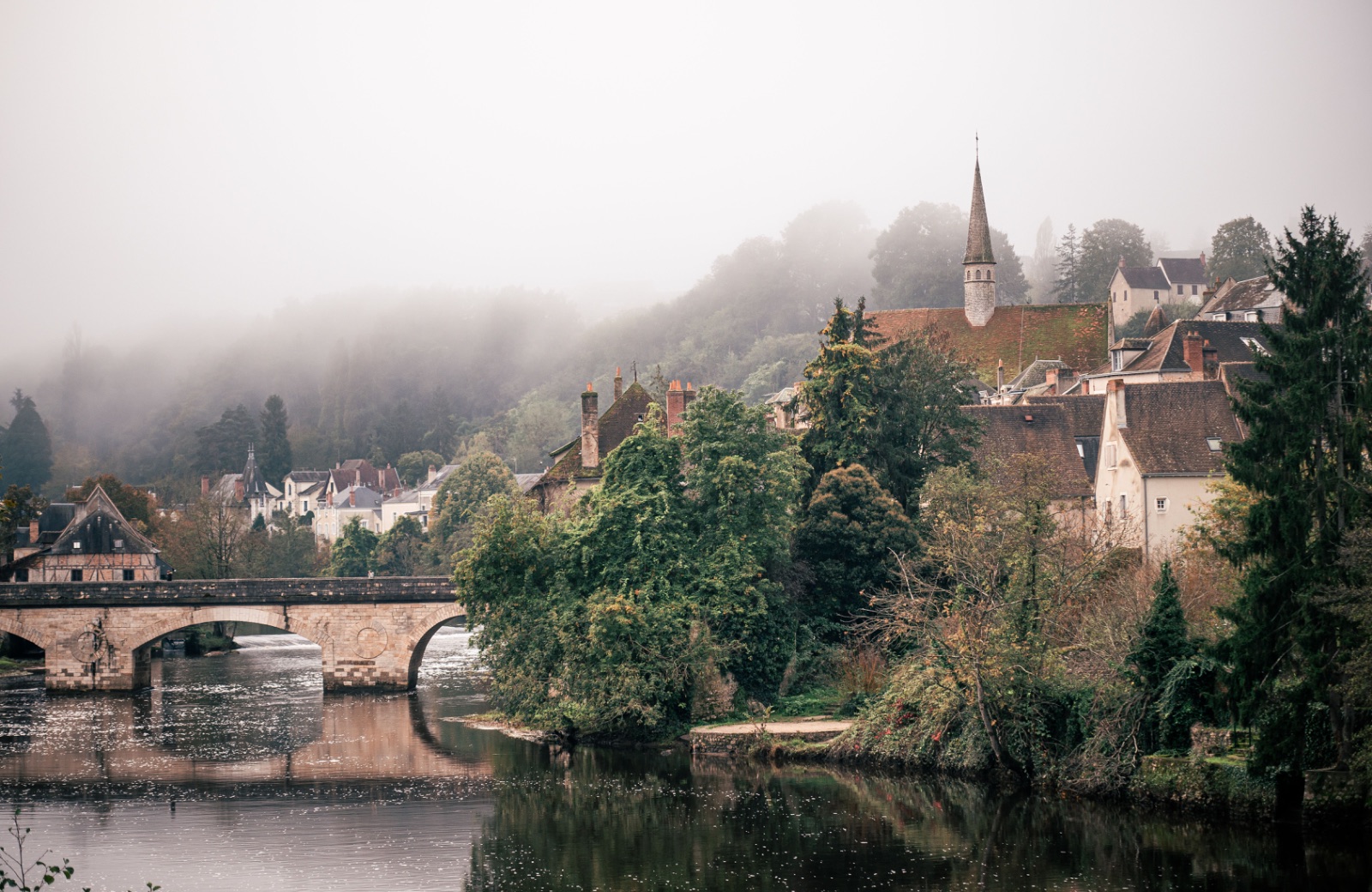
The shutting-down month. Weather turns properly wet, many seasonal businesses close, and the year's quiet begins. Toussaint at the start of the month is a significant date locally.
What remains: markets, the larger towns, walking, and very good value.
December
Quiet, damp and cheerful in a domestic way. Christmas markets appear in the larger towns, and the food culture is at its most serious — foie gras, capon, oysters, and Monbazillac on every table. Village life turns inward.
What the weather actually does
Generalisations are risky and the region does vary, but the broad pattern is consistent enough to plan around.
Summers are hot. Not Mediterranean-hot every day, but inland, away from the moderating ocean, July and August regularly reach into the thirties and can go considerably higher during a canicule. Houses here are built for it — thick stone walls, shutters closed through the middle of the day — and adapting to that rhythm rather than fighting it is the trick.
Winters are mild and wet. Frost occurs, hard frost less often, and snow is rare and usually brief. What you get instead is rain and grey, sometimes for a week at a time. Anyone arriving expecting Provence will be disappointed; anyone arriving from northern Britain or the Netherlands will find it a clear improvement.
Spring and autumn are the variable ones. Both can deliver extended stretches of warm settled weather and both can turn wet. April is the least predictable month of the year; October is often the most pleasantly surprising.
Storms are a summer feature. Heat builds through several days and breaks in a substantial thunderstorm, sometimes with hail — which is a genuine agricultural risk here rather than a spectacle, and you will hear growers talk about it.
The mist matters. Autumn morning mists rising off the river valleys are what make the sweet wines of Monbazillac and Saussignac possible. They also make for extraordinary early-morning drives, with bastide towns floating above a white valley floor.
The events calendar
Roughly what happens when, though almost none of it is advertised beyond a local sign.
Spring — Easter reopenings, plant fairs and garden festivals, the first vide-greniers of the year as villages empty their attics.
Early summer — the Fete de la Musique in June puts music into every town square on the same evening. Village fetes begin. Night markets start in some communes.
High summer — the densest stretch. Fetes de village most weekends somewhere within reach, marches nocturnes several evenings a week across different communes, medieval festivals at the chateaux, open-air concerts, and Bastille Day on 14 July with fireworks and a bal.
Early autumn — harvest festivals, the vendange itself, walnut fairs, and the start of the mushroom season, which is taken seriously and pursued privately.
Late autumn and winter — Toussaint at the beginning of November, Christmas markets in the larger towns, and the winter food season with its foie gras and truffle markets.
Practical planning notes
French school holidays drive domestic crowding more than foreign tourism does. The long summer break runs through July and August, and there are shorter holidays around Toussaint, Christmas, February and Easter, staggered across three zones. Avoiding those weeks makes a noticeable difference at the popular sites.
Booking matters in July and August for accommodation, restaurants on market days, and the caves with original prehistoric art. Outside that window, very little needs booking.
Closures follow a predictable pattern: many rural restaurants and small attractions close from November to Easter, a good number of businesses take their own holiday in August, and Sunday afternoon and Monday are quiet year-round.
Flights to Bergerac are strongly seasonal, with routes thinning considerably in winter. Bordeaux, an hour further, runs a full year-round network and becomes the winter airport for most residents.
Heat planning in summer means inverting the day rather than shortening it: sightseeing before eleven, water or shade until five, and everything social in the evening. It is how the whole country operates and it works.
Choosing by purpose
Sightseeing the famous sites: June or September. Everything open, weather good, no queues.
Walking and cycling: May, June, September, October. Avoid the July–August heat and the wettest winter weeks.
Wine: September and October for the harvest atmosphere; spring for growers who have time to talk; winter for the most generous tastings.
Markets and food: autumn is the best of the year, though every month has something.
Village life and events: July and August, without question.
Value: November to March, by a wide margin.
Assessing a move: February first, then June. In that order.
The mistake almost everyone makes
Visiting in summer and deciding on that basis.
A fortnight here in June is an extraordinarily persuasive experience. The light is long, the squares are full, the markets are at their best, and every village looks like the answer to a question you have been asking for years.
None of that tells you what a Tuesday in February is like — whether the bakery opens, whether there is anyone in the bar, whether the quiet reads as peace or as isolation. That is the thing that decides whether people stay, and it is invisible in summer.
The people who settle happily here are almost always the ones who came back in winter before committing. The ones who sell up after three years are usually the ones who did not.
The year in the Duras area
The country framed by Sainte-Foy-la-Grande, Bergerac, Villeréal, Lauzun and Marmande has a particular advantage in this respect, which is that its year is less extreme than the region's famous parts.
Because this pocket is not on the tourist circuit, August here is lively rather than overwhelmed. The night markets and fêtes happen, the square at Duras fills, the vineyards run open evenings — but you can still park, still get a table, still drive the roads. You get the sociable summer without the compression.
And because the towns have genuine year-round populations rather than high proportions of second homes, the winter is quieter without being hollow. Duras has its Monday market through the year. Eymet's Thursday market runs regardless. Bergerac, half an hour away, functions as a full town in February exactly as it does in July. The associative life — walking clubs, choirs, language exchanges, the comité des fêtes — carries the season for people who join in.
The agricultural calendar is more present here than in the tourist strip, too, because you are living among working vineyards, orchards and farms rather than beside them. You notice the pruning fires in January, the frost alarms in April, the flowering in June and the harvest in September, and after a couple of years you find you are talking about the vintage as something you experienced.
That is a different relationship with the year than a visitor can have, and it is the reason the February question matters so much. If a quiet, wet, working February in a small French town sounds like somewhere you would be content, then the Junes here are extraordinary. If it does not, no amount of summer will fix it.
Tina lives in the Duras area through all twelve of these months and will give you a straight account of what each is actually like — including the ones nobody puts in a brochure — in your own language.
Why this matters if you're looking at Duras
A year in the Duras area has a very clear shape, and knowing it changes what you plan. Tina lives here through all of it and will tell you honestly.
Frequently asked questions
What is the best month to visit southwest France?
Is August a bad time to visit?
How hot does it get in summer?
What is the weather like in winter?
What closes in winter?
When is the grape harvest?
When should I come if I am thinking of moving here?
Is spring or autumn better?
Sources & last reviewed
Last reviewed: 28 August 2026. Rules, rates and figures change — always confirm the current position with the official source before you act.